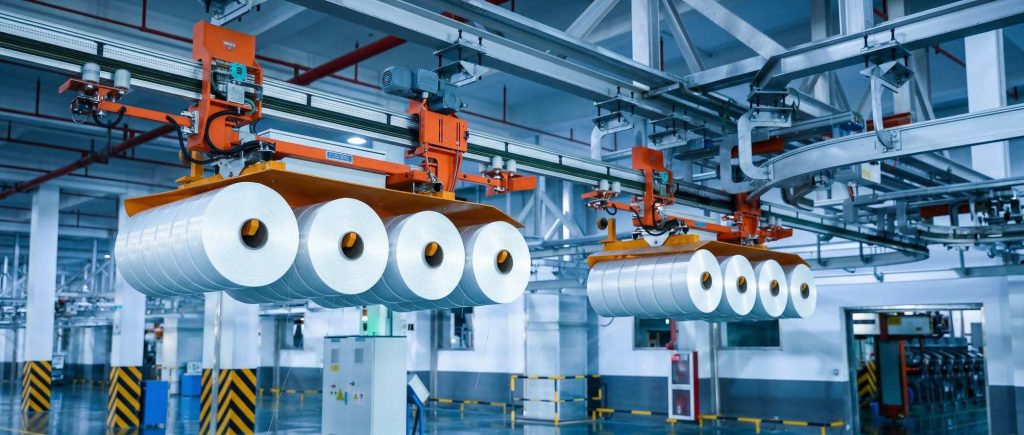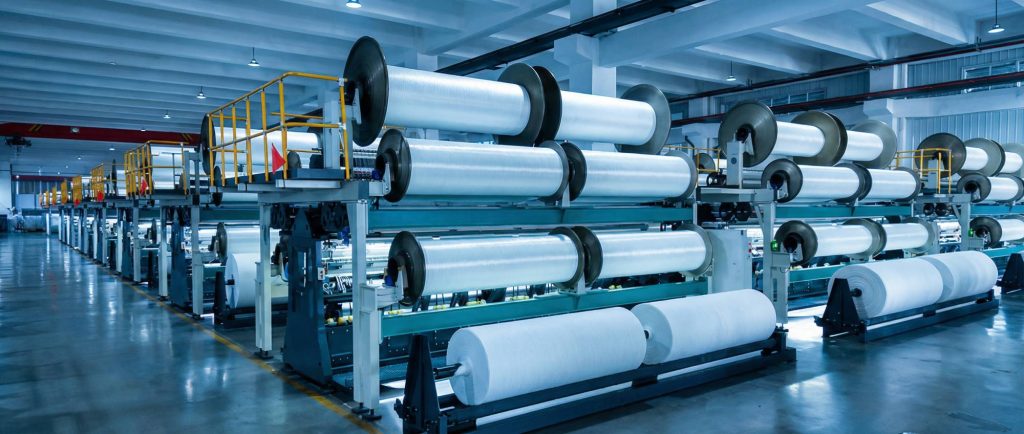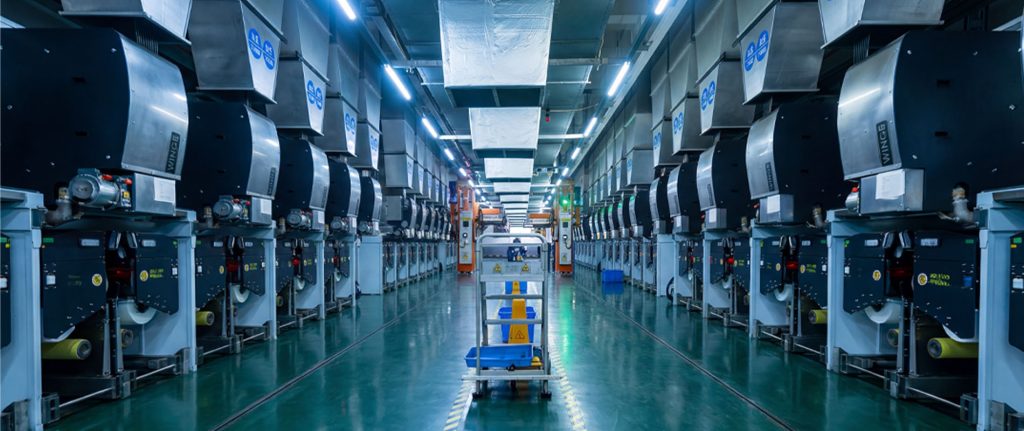
In the global textile industry, polyester (polyethylene terephthalate or PET) dominates as one of the most widely used synthetic fibers. At the heart of polyester filament production lies Polyester POY (Pre-Oriented Yarn or Partially Oriented Yarn). Often called a “semi-finished star,” POY serves as a critical intermediate product that enables the creation of high-value downstream yarns and fabrics. From everyday apparel and home textiles to technical and industrial applications, POY plays an essential role in the polyester value chain.
What is Polyester POY?
Polyester POY is a type of continuous filament yarn produced through high-speed melt spinning of PET polymer. It features a partial molecular orientation, positioned between undrawn yarn (UDY) and fully drawn yarn (FDY). The term “Partially Oriented Yarn” accurately describes its characteristics: the polymer chains are aligned to some extent during spinning, giving the yarn enough stability for storage and further processing, but not full strength or low elongation.
Common specifications include 75D/36F, 150D/48F, 300D/72F, and others (where D stands for denier and F for filaments). POY is primarily used as feedstock for downstream processes rather than direct weaving or knitting.
Production Process of Polyester POY
The manufacturing of POY follows a streamlined, high-efficiency melt-spinning route:
- Polymerization: Purified terephthalic acid (PTA) and monoethylene glycol (MEG) react to form PET polymer chips or melt.
- Melting and Extrusion: The polymer is melted (around 290°C), metered, filtered, and extruded through a spinneret to form multiple continuous filaments.
- Quenching: The hot filaments are rapidly cooled and solidified using cross-flow air in a quenching chamber.
- Partial Drawing and Winding: The filaments undergo light drawing (partial orientation) and are wound at high speeds (typically 2800–4000 m/min or higher). Spin finish oil is applied to reduce static and friction.
This process is faster and more flexible than full drawing methods, allowing quick variety changes and lower energy consumption compared to some alternatives.
Key Properties and Advantages
Polyester POY offers a balanced set of properties ideal for further processing:
- Moderate Tenacity and High Elongation: Typical tenacity ranges from 2.5–4.0 cN/dtex, with elongation often between 90%–130%. This makes it easy to stretch and texture without breaking.
- Uniformity and Stability: Good package formation, even yarn quality, low breakage rates during unwinding, and excellent dye uniformity.
- Versatility: Highly compatible with texturing, drawing, and air-entanglement processes.
- Cost-Effectiveness and Durability: Lightweight, abrasion-resistant, wrinkle-resistant, and more affordable than many natural fibers while maintaining good heat and chemical resistance.
These traits make POY an efficient starting material for creating soft, bulky, or elastic fabrics.
Differences Between POY, FDY, and DTY
Understanding POY requires comparing it with its close relatives in the polyester filament family:
- POY (Partially Oriented Yarn): Intermediate product with partial orientation, high remaining elongation (>50%), and good processability. Mainly used for further processing.
- FDY (Fully Drawn Yarn): Produced with full stretching during spinning. It has high strength, low shrinkage, excellent stability, and can be used directly in weaving or knitting for smooth, flat fabrics like linings and curtains.
- DTY (Draw Textured Yarn): Made by draw-texturing POY through stretching, twisting, and heat-setting. It gains bulk, elasticity, crimp, and a soft hand feel, making it ideal for knitwear, sportswear, and stretch fabrics.
In simple terms: POY is the versatile raw material → DTY adds texture and stretch → FDY provides straight, strong, ready-to-use filament.
Wide Range of Applications
POY itself is rarely used directly in final products. Instead, it is converted into:
- Apparel: Processed into DTY for T-shirts, activewear, dresses, socks, and underwear.
- Home Textiles: Curtains, bed sheets, upholstery, and blankets (via FDY or textured yarns).
- Industrial and Technical Textiles: Conveyor belts, safety belts, automotive interiors, and geotextiles.
- Other Specialty Products: Air-textured yarn (ATY), network yarns, and high-performance fabrics.
Its adaptability supports both fashion trends (soft hand feel, vibrant dyeing) and functional needs (durability, quick drying).
Market Outlook
The global polyester fiber market continues to expand, with POY playing a foundational role. Driven by demand in apparel, technical textiles, and emerging economies, the polyester POY segment is projected to grow steadily in the coming years. Factors such as cost efficiency, recycling advancements, and sustainable production methods are shaping its future. Asia remains the dominant production and consumption hub.
Conclusion
Polyester POY may not grab headlines like finished garments, but it is the quiet enabler behind much of today’s textile innovation. Its unique balance of processability, cost, and performance ensures it remains indispensable in the polyester supply chain. As the industry moves toward more sustainable and high-performance materials, POY will continue to evolve—supporting everything from fast fashion to durable technical applications.
Whether you are a textile manufacturer, buyer, or enthusiast, understanding POY provides valuable insight into how synthetic fibers power modern fabrics.
This article is written in clean, professional English, ready for direct copy-paste into WordPress (with headings formatted as H2/H3 if needed). You can add images, SEO keywords (e.g., “polyester POY yarn”, “POY vs DTY”), or internal links as required. Let me know if you need any section expanded, shortened, or modified!